




Protein is one of the three macronutrients, together with carbohydrates and fats. It is made of amino acids and is part of every cell in the body. Here is how much we need and where to find it.
What protein does
Protein contributes to a growth in muscle mass, to the maintenance of muscle mass and to the maintenance of normal bones (authorised EU claims). The body also uses amino acids to build enzymes, hormones and other proteins.
How much protein do adults need?
The European Food Safety Authority (EFSA) sets the population reference intake for adults at 0.83 g of protein per kilogram of body weight a day. For a person who weighs 70 kg this is about 58 g of protein a day. Needs may be different for older adults, during pregnancy and with a lot of physical activity.
Protein in food
- meat, fish and eggs,
- milk, yoghurt, cottage cheese and cheese,
- legumes: lentils, beans, chickpeas and peas,
- tofu and other soy products,
- nuts and seeds, whole grains.
A good habit is to include a source of protein at each main meal.
Protein with age
Muscle mass slowly decreases with age. Regular movement, including exercises with resistance, and enough protein in the diet help maintain muscle mass.
Protein powder
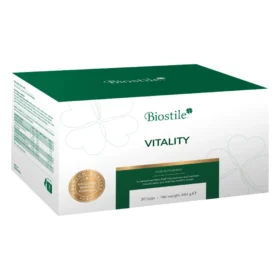
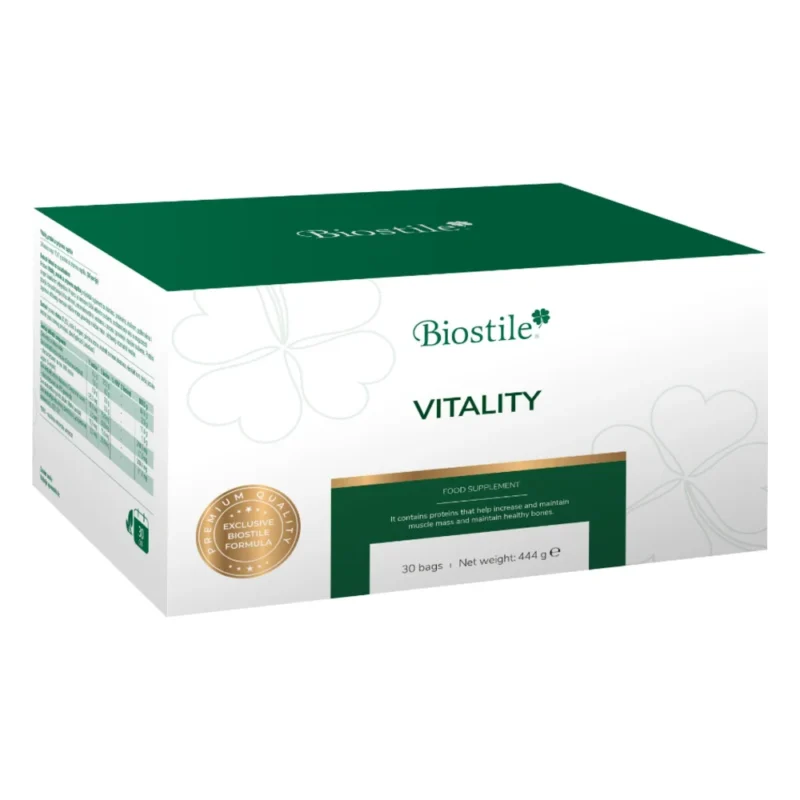
A protein drink can complete the diet when it is hard to get enough protein from meals. Biostile Vitality is a milk protein powder with 26 g of protein in 2 sachets a day, without added sugar. You can find more products in the category Energy and vitality.
Food supplements are not a substitute for a varied and balanced diet and a healthy lifestyle. This article is for information only and does not replace advice from a doctor or pharmacist.